Favorite Books of 2025
Four years ago, I learned to speed read, and it transformed my relationship with books. What had been a modest habit of 1-3 books a year exploded to 12-15. More importantly, reading became exciting again. While I enjoyed reading before, it now became a source of inspiration and discovery that I looked forward to every day. In a world where social media and AI are increasingly telling us what to think and how to feel, books offer something rare: the freedom to choose our own journey and sit with our own reactions. They demand our attention, our critical thinking, and our willingness to wrestle with ideas on our own terms.
This matters more now than ever. Our comprehension and capacity for deep thought are under assault. Not just by AI, but by the constant scroll, the algorithmic feeds, the manufactured outrage designed to keep us engaged but disconnected. Today, I see books is an act of resistance. It's a way to reclaim our attention, sharpen our minds, and remember that we can think for ourselves. It's a fundamentally human skill that no algorithm can replicate and no machine can automate.
The books I read this year reflect themes I care deeply about: who we are as people, how we connect authentically, how we lead consciously, how systems of power shape our reality, and how we might build something better together. All of them challenged me, inspired me, and helped me grow. Here are my favorites from 2025.
10. The Best Minds
I rarely pause to notice exceptional writing, but Rosen's style stopped me repeatedly. This memoir follows his childhood friend Michael: brilliant, promising, and beloved, as schizophrenia gradually dismantles his life. Rosen writes with such clarity that I could visualize every scene, feel every surge of hope and crushing disappointment as Michael cycled through treatments, institutions, and desperate attempts to rebuild. The book reminded me how mental illness doesn't just change a person, it transforms every relationship around them. The writing kept me in that uncomfortable space of wishing for hope but expecting heartbreak, never offering easy answers about what friendship means when someone's reality is flipped upside down. My only critique: it runs a bit long, though perhaps necessary to paint the complete tragic picture.
09. Uncultured: A Memoir
I'd never heard of The Children of God (now The Family International), and within pages I understood why: this cult systematically abused children while hiding behind religion commune living. Young's memoir goes into detail about the horrors she endured growing up in this environment. My jaw was on the floor throughout: the manipulation, the violence, the way adults weaponized faith to justify abuse. But what makes this book unforgettable isn't just the darkness, was Young's sheer will to overcome it. She didn't just escape; she rebuilt herself, earned a degree from West Point, and became an officer in Army Intelligence (what might be looked at as another cult). What a story of what humans are capable of inflicting on each other, and what we're capable of surviving.
08. Sociopath
The final memoir in my list offers a rare glimpse into the mind of a sociopath. Not as a villain, but through the author’s own journey to understand her condition in service of helping others. She reflects what it means to move through the world without typical emotional responses, exposing her inner calculations and impulses with open honesty. I learned more about sociopathy from this book which softened my view on the condition, reminding me that even people we're taught to avoid (or fear) have their own struggle to be seen as human.
07. Talking to Strangers
Gladwell's exploration of why we so often misunderstand strangers hit me hard because it gets at the heart of why authentic connection is so difficult, and so important. Humans assume we can read people's emotions from their behavior, we can default to believing what others tell us, and we ignore the context that shapes how people show up in the world. These incorrect assumptions can cause massive problems in our lives, sometimes being deadly. This speaks to the work I do at Conscious Ground, bridging the gaps between people who see the world differently. This book reminded me that the first step is humility, acknowledging that we don't know what we think we know about others. If we can approach strangers (or anyone) with curiosity instead of certainty, restraint instead of quick judgment, we create space for real understanding. That's the foundation of solidarity and collaboration.
06. There is No Place for Us
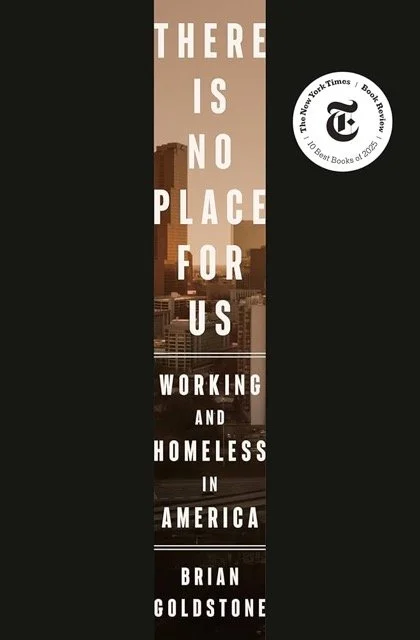
For a long time, I’ve rejected the idea homelessness is a problem of people not trying hard enough. This book shattered any remaining illusions I had about the "housing crisis" being some natural market phenomenon. Goldstone details some brutal truth here: homelessness in America is a deliberate choice, engineered by private equity firms, corporate landlords, and policy loopholes designed to extract maximum profit from desperate families. People working 60-hour weeks still can't afford rent. Families get evicted at gunpoint from extended-stay hotels charging double what an apartment would cost. This is manufactured disconnection at its most vicious: systems intentionally designed to keep people scrambling, isolated, and powerless. This book brings the receipts. It's essential reading for anyone who wants to understand what solidarity actually means: recognizing that if any of an enemy, it shoudn’t be each other. It's the systems profiting from our desperation.
05. Tiny Experiments
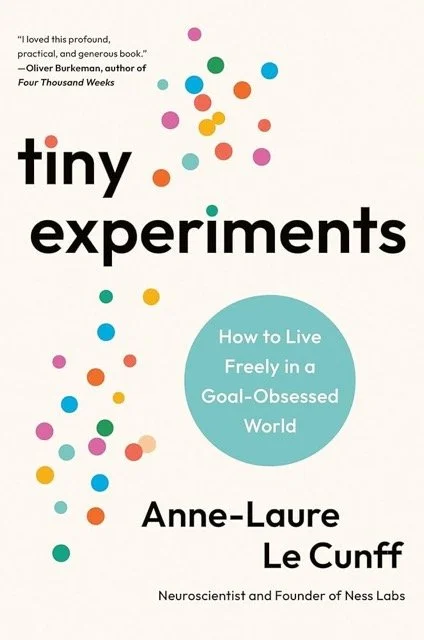
I was illuminated and in agreement with this book’s premise that the way we measure goals increasingly creates anxiety, breed toxic productivity, and trap us in a race toward destinations we never truly wanted. Le Cunff offers a radically different approach: think like a scientist conducting experiments on your own life. Instead of fixating on an idealized end state (which you'll likely never reach anyway), find fulfillment in the learning itself: the exploration, the iterations, the discoveries in the space between where you are and where you think you should be. Her ideas and frameworks became the foundation for much of my work in 2025. I stopped asking "What do I want to achieve?" and started asking "What do I want to learn?" That shift, from outcome to process, from control to curiosity changed a lot for me. I’m not completely free of linear goals, but I look at things quite differently now.
04. Red Helicopter
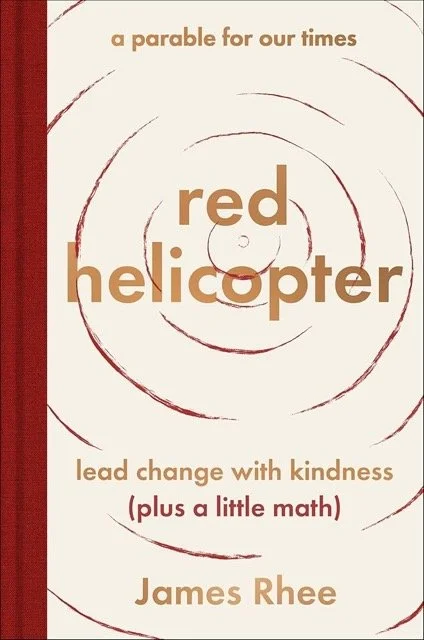
James Rhee did something radical when he took over bankrupt retailer Ashley Stewart: he led with kindness and math in equal measure. Not niceness: intentional, forceful kindness that created goodwill, an asset never appears on a balance sheet. His framework flips conventional business wisdom: stop obsessing over the income statement (quarterly revenue, short-term wins) and invest in the balance sheet (relationships, trust, transparency). He made data accessible to everyone, rewarded collective ownership, and paid workers through debit cards so they could bypass predatory check-cashing stores. This one was so heartwarming, reminding me that we can measure success differently. We can have human connection and collaboration that inspires while also being successful in business.
03. 1984
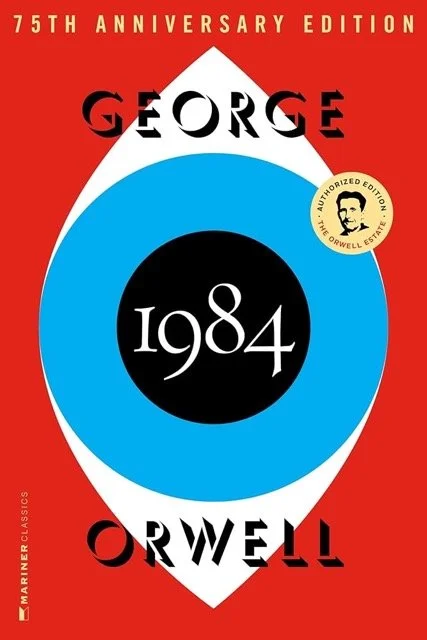
I've read 1984 previously, but it's never felt more powerful or urgent. In my opinion it is worth a re-read. Orwell warned us: "The Party told you to reject the evidence of your eyes and ears. It was their final, most essential command." It feels like we’ve never been living this more than right now. Algorithms curate reality, surveillance tracks our every move, and truth is whatever those in power say it is. "War is peace, freedom is slavery, ignorance is strength" sounds dystopian until you realize we're drowning in propaganda disguised as news, outrage engineered to divide us, and systems designed to make us forget we can think for ourselves. Those in power in this book didn't just control what people did, it controlled what they thought, making independent thinking impossible. Orwell's message never felt more important: question everything. Think independently. Because the moment we stop, we've already lost. I truly believe we can learn to to that again. We need to start with awareness of the systems manipulation all around us.
02. Enshittification
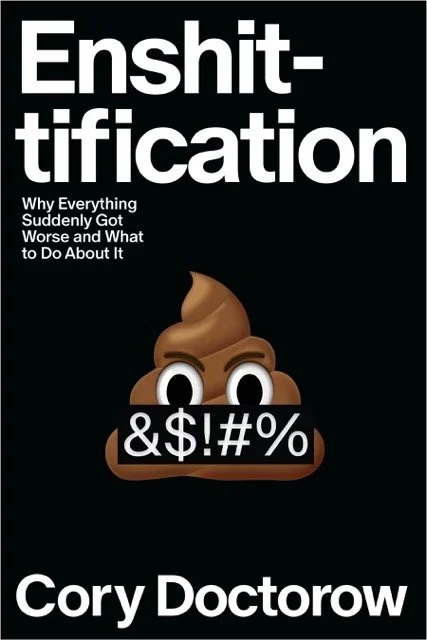
This one hit home because it puts something that we all experience into eloquent words. The apps, services and platforms we use every day are getting worse on purpose. First they're good to users, then they abuse users to please advertisers and sellers, then they abuse everyone to enrich shareholders. It's the trend of deliberate extraction we seem to be seeing in almost all walks of life recently. Google makes results worse so you search more times and see more ads. Your car spies on you. Your printer rejects third-party ink. Facebook turned into a surveillance engine. This is the new business model needed for growth at all costs: trap you with network effects, then squeeze until there's nothing left. What I love is that Doctorow doesn’t just call out the problem, he also offers solutions. Enshittification is a choice made by systems designed to concentrate wealth and control. We can choose differently. Competition. Regulation. The right to leave. Worker solidarity. The platforms want us to believe there's no alternative. That's the lie we need to confront first.
01. Social: Why Our Brains Are Wired To Connect
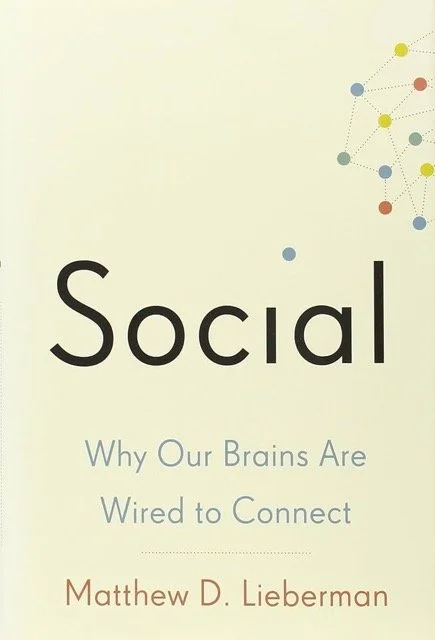
Based on my love of understanding how humans connect with one another, Social quickly moved to the top of my list. Citing and leading multiple studies of how our brains react to social interactions, Lieberman painted a truly fascinating picture for me. Our brains are wired for connection from birth, spending every free moment thinking socially. Social pain activates the same neural circuits as physical pain. Rejection literally hurts. Lieberman shows how understanding others' minds, self-control, and our sense of identity all evolved to serve group harmony, not individualism. The data is clear: social connection predicts happiness far better than money, yet we've built schools and workplaces that ignore this fundamental truth. One stat stayed with me: 25% of Americans now report having zero close friends, up from 10% in 1985 (and this book was released in 2013!). An early warning on why loneliness is killing us and what neuroscience reveals about building lives worth living.